This Fashionista video are create to convey on how ladies on this era are dressed up to make their day. For the non-muslimah, they are free to dress based on their like and interest. However, they are also encourage to wear an apparel that shows an element of modesty and moderation as our external appearance will reflect for who we are. Same as the muslimah. But, do not forget that every muslimah are obligate to cover their whole body except their face and hand. Thus, even though we are open to the trendy world nowadays, whether we like it or not, as a good muslimah, we must follows the rule that have been highlight in Islam. Keep believe that all the rules are made for our own sake now and hereafter.


Showing posts with label fashion. Show all posts
Showing posts with label fashion. Show all posts
Fashionista
This Fashionista video are create to convey on how ladies on this era are dressed up to make their day. For the non-muslimah, they are free to dress based on their like and interest. However, they are also encourage to wear an apparel that shows an element of modesty and moderation as our external appearance will reflect for who we are. Same as the muslimah. But, do not forget that every muslimah are obligate to cover their whole body except their face and hand. Thus, even though we are open to the trendy world nowadays, whether we like it or not, as a good muslimah, we must follows the rule that have been highlight in Islam. Keep believe that all the rules are made for our own sake now and hereafter.

The Rise of Fashion.
Clothing in 12th and 13th century Europe remained very simple for both men and women, and quite uniform across the subcontinent. The traditional combination of short tunic with hose for working-class men and long tunic with overgown for women and upper class men remained the norm. Most clothing, especially outside the wealthier classes, remained little changed from three or four centuries earlier.
The 13th century saw great progress in the dyeing and working of wool, which was by far the most important material for outer wear. Linen was increasingly used for clothing that was directly in contact with the skin. Unlike wool, linen could be laundered and bleached in the sun. Cotton, imported raw from Egypt and elsewhere, was used for padding and quilting, and cloths such asbuckram and fustian.
Crusaders returning from the Levant brought knowledge of its fine textiles, including light silks, to Western Europe. In Northern Europe, silk was an imported and very expensive luxury. The well-off could afford woven brocades from Italy or even further afield. Fashionable Italian silks of this period featured repeating patterns of roundels and animals, deriving from Ottoman silk-weaving centres in Bursa, and ultimately from Yuan Dynasty China via the Silk Road.
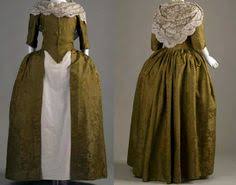
Cultural and costume historians agree that the mid-14th century marks the emergence of recognizable "fashion" in Europe.From this century onwards Western fashion changed at a pace quite unknown to other civilizations, whether ancient or contemporary. In most other cultures only major political changes, such as the Muslim conquest of India, produced radical changes in clothing, and in China, Japan, and the Ottoman Empire fashion changed only slightly over periods of several centuries.




Subscribe to:
Posts (Atom)